


Bellows vs. Sleeve Air Bags
8/22/2026
When shopping for an air suspension system, you'll quickly discover that not all air springs are built the same. Two of the most common designs are bellows-style and sleeve-style air springs. While both use compressed air to improve ride quality and support vehicle loads, each is engineered for different applications.
Understanding the differences between these two air spring designs can help you choose the right suspension solution for your truck, SUV, commercial vehicle, or performance build.
What Are Bellows Air Springs?
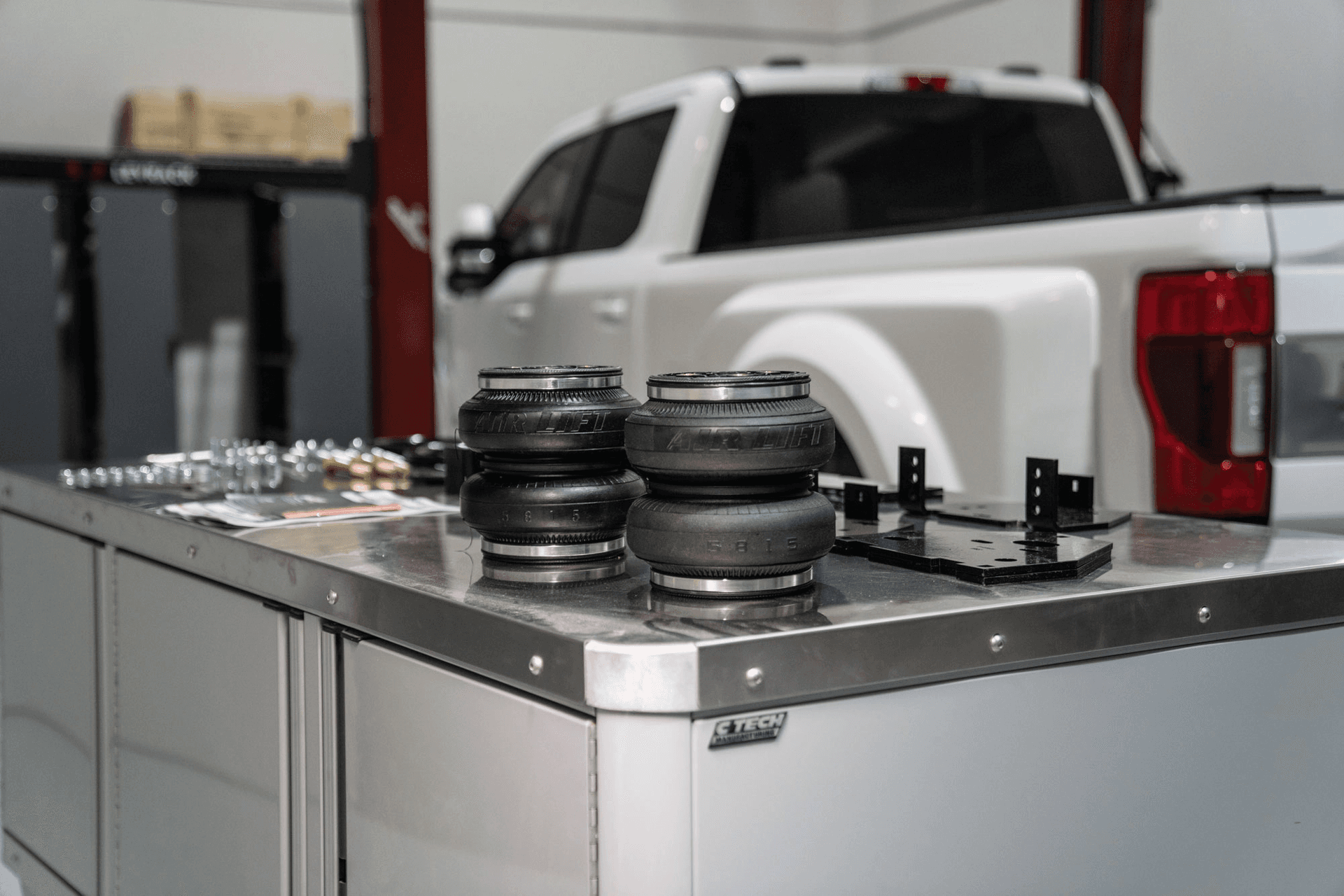
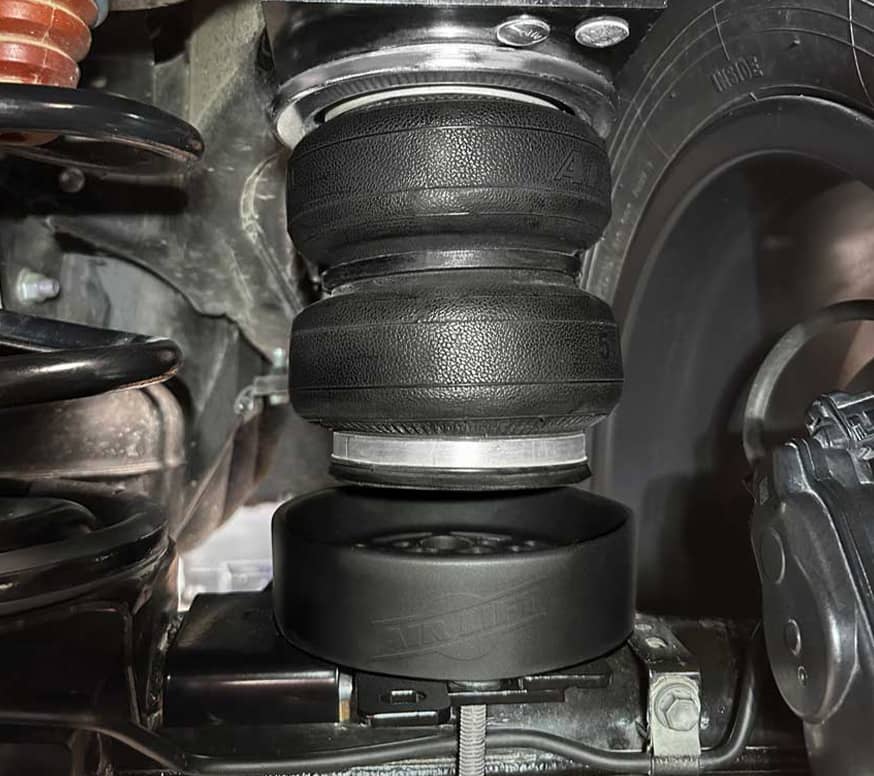
Bellows-style air springs are constructed from heavy-duty reinforced rubber and feature one or more convoluted chambers. Their larger diameter allows them to hold more air volume, providing greater lifting force and load-handling capability than sleeve-style air springs. Because of their design, bellows air springs can often support the same load at lower air pressure than a sleeve-style spring.
Bellows air springs are commonly found on vehicles that regularly tow, haul, or carry heavy loads. They're ideal when there's enough suspension space to accommodate their larger size.
Benefits of Bellows Air Springs
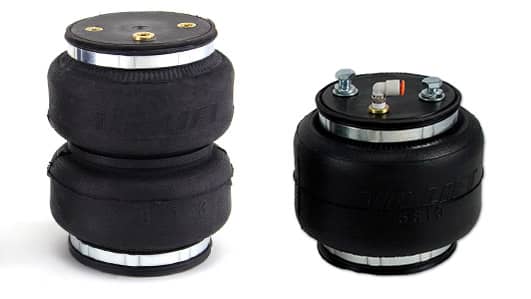
- Excellent load support for towing and hauling
- Larger diameter air springs allow for increased load capacity
- Supports heavy-duty applications
- Lower air pressure required for comparable loads
- Durable design for demanding work environments
Common Applications
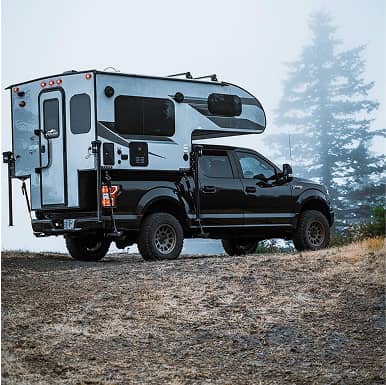
- Pickup trucks
- Heavy-duty towing
- RVs and motorhomes
- Commercial and fleet vehicles
- Trailers
Air Lift bellows-style air spring kits include:
What Are Sleeve Air Springs?
Sleeve-style air springs feature a flexible rolling sleeve design that allows them to maintain a smaller overall diameter. This compact construction makes them an excellent choice when installation space is limited or suspension packaging is tight.
Rather than focusing solely on maximum load support, sleeve-style air springs are engineered to provide ride control while fitting applications where a bellows-style air spring simply won't fit.
Benefits of Sleeve Air Springs
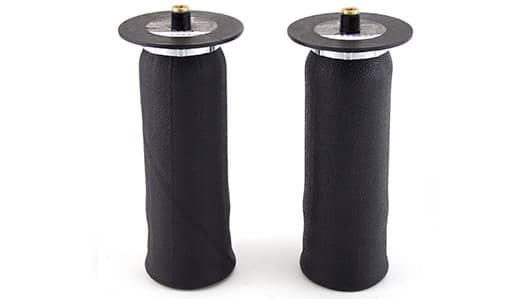
- Compact overall size
- Excellent for limited installation space
- Smooth ride control
- Lightweight design
- Ideal for specialized suspension applications
Common Applications

- Light-duty trucks
- SUVs
- Lowered trucks
- Custom street rods
- Track and performance vehicles
Air Lift sleeve-style products include:
Bellows vs. Sleeve Air Springs Comparison
Feature | Bellows | Sleeve |
Overall Size | Larger diameter | Smaller diameter |
Air Volume | Higher | Lower |
Load Capacity | Excellent | Moderate |
Operating Pressure | Lower for comparable loads | Higher for comparable loads |
Space Required | More installation space | Compact installation |
Ride Control | Excellent | Excellent |
Best For | Heavy towing & hauling | Tight packaging & lighter-duty applications |
Typical Vehicles | Trucks, RVs, commercial vehicles | SUVs, light-duty trucks, performance vehicles |
Towing | ★★★★★ | ★★★☆☆ |
Performance Applications | ★★★☆☆ | ★★★★★ |
Which Air Spring Is Right for You?
The right air spring depends on how you use your vehicle — not which design is "better."
Choose Bellows Air Springs If You:
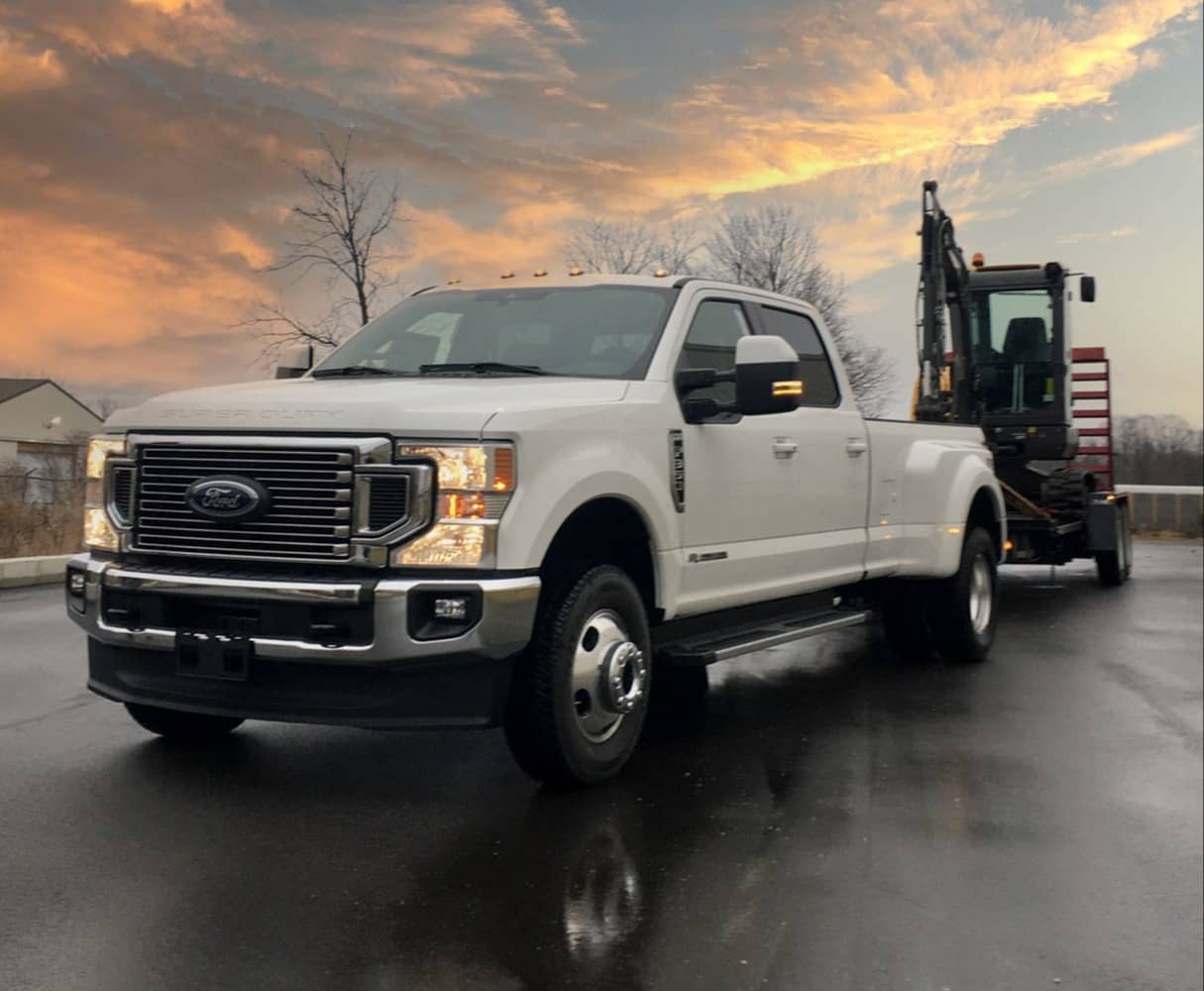
- Frequently tow trailers
- Carry heavy payloads
- Want maximum load-leveling capability
- Have adequate suspension clearance
- Need support for commercial or heavy-duty applications
Choose Sleeve Air Springs If You:

- Have limited suspension space
- Drive a lighter-duty truck or SUV
- Want improved ride control
- Own a lowered or custom vehicle
- Need a compact air spring solution
How Air Lift Engineers the Right Solution
At Air Lift, every air spring kit is engineered specifically for the intended vehicle and application. Rather than choosing between bellows or sleeve based solely on appearance, our engineers determine which design delivers the best combination of load support, ride quality, durability, and fitment for each vehicle platform.
Whether you need maximum load support for towing or a compact solution for a custom suspension, Air Lift offers a system designed to meet your needs. Our products undergo extensive durability and quality testing, including cycle testing and burst testing, to help ensure long-term performance in real-world conditions.
Frequently Asked Questions
Are bellows air springs stronger than sleeve air springs?
Bellows air springs generally provide greater load support because of their larger diameter and higher air volume. However, sleeve air springs are designed for different applications where packaging space is limited. Each design is engineered to perform best within its intended use.
Do sleeve air springs provide a better ride?
Ride quality depends on the vehicle and the suspension design rather than the air spring style alone. Sleeve air springs are commonly selected where compact packaging and ride control are priorities, while bellows air springs excel in heavier-duty applications.
Can I replace a sleeve air spring with a bellows air spring?
Generally, no. Air spring type is determined by the available suspension space and the vehicle's suspension geometry. Air Lift engineers each kit to ensure proper fitment, performance, and durability for the specific application.
Which Air Lift products use bellows air springs?
Air Lift's bellows-style products include:
Which Air Lift products use sleeve air springs?
Air Lift's sleeve-style air spring products include:
These products are designed for applications where installation space is limited or where a sleeve-style air spring is the best engineering solution.
Find the Right Air Spring for Your Vehicle
Whether you're towing a camper, hauling equipment, upgrading a work truck, or improving ride quality, Air Lift has an air spring system designed for your vehicle.
Use our Shop My Vehicle tool to find the right Air Lift suspension solution for your application.